Returning to Firms I
Recall: firms convert some goods to other goods:
Inputs: x1,x2,⋯,xn
- Examples: worker efforts, warehouse space, electricity, loans, gasoline, cardboard, fertilizer, computers, software programs, etc
Output:1 q
- Examples: oil, cars, legal services, mobile apps, vegetables, consulting advice, financial reports, etc

Returning to Firms II
Suppose a firm sells output q at a price p
It can buy each input xi at an associated price pi
- labor l at wage rate w
- capital k at rental rate r
Profit ⟹ improving the (total) value of resources
- bought inputs at some total cost
- sold as final product at some market price

Supply and Demand in Factor Markets
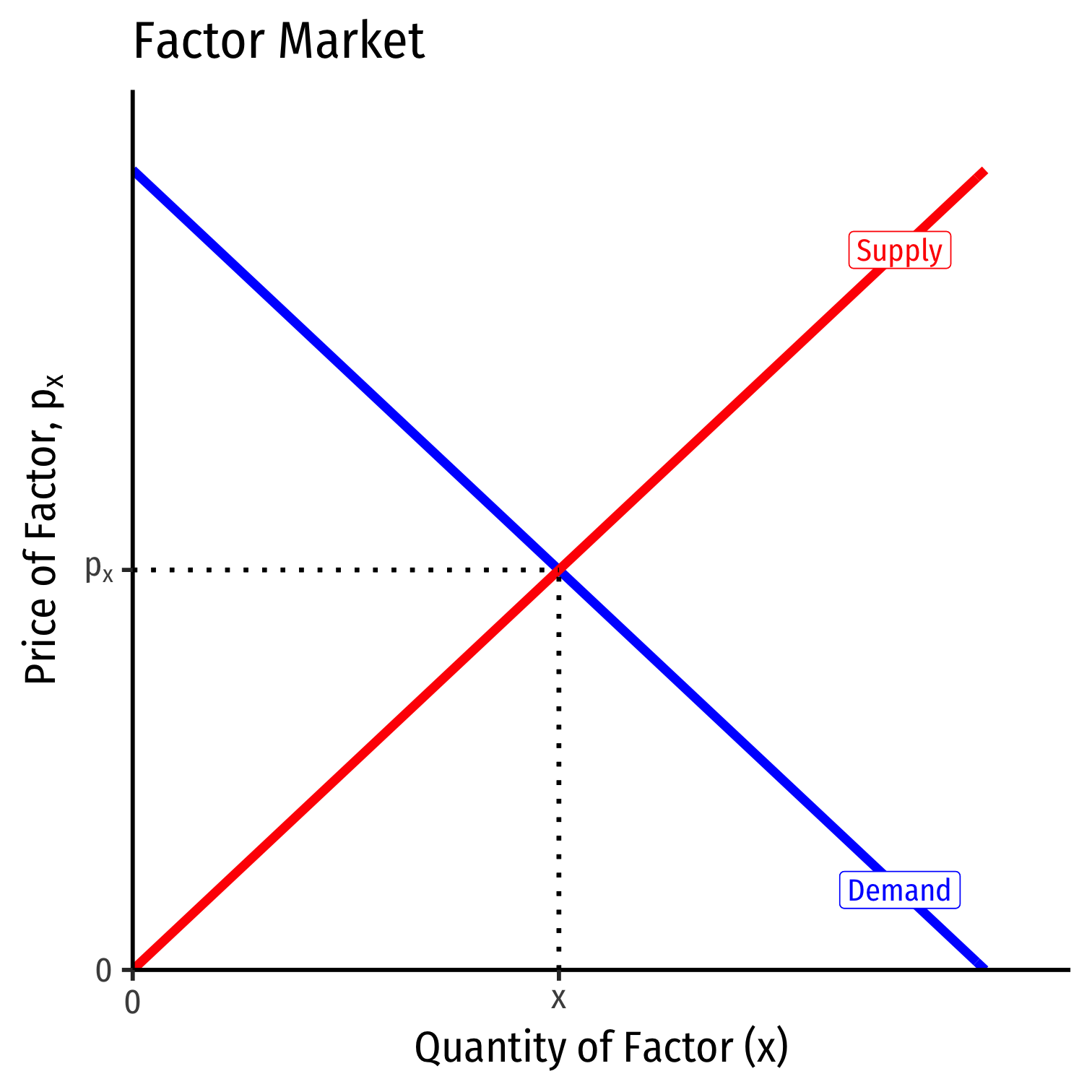
The price of a factor is governed by the same market forces as output: Supply and Demand
Supply of Factor: willingness of factor owners to accept and sell/rent their services to firms
- landowners, workers, capitalists, resource owners, suppliers
Demand for Factor: willingness of firms to pay for factor services
Factor Market Prices and Opportunity Costs
In functioning factor markets, the factor price represents the opportunity cost of hiring a factor for an alternative use
- Firms not only pay for direct use of a factor, but also indirectly for not using it in an alternate process!
Example: a producer of hammers buys steel, pays (the opportunity cost) for "taking" the steel away from alternative uses
Example: e.g. salary for a skilled worker must be high enough to keep them at their current firm, and not be attracted to other firms/industries

Labor Markets
Empirically, about 70% of total cost of production comes from labor
We'll focus just on the market for labor as an example factor market
Can do the same for any factor market
- (e.g. capital, land, materials, etc.)

Marginal Revenue Product for Competitive Firms
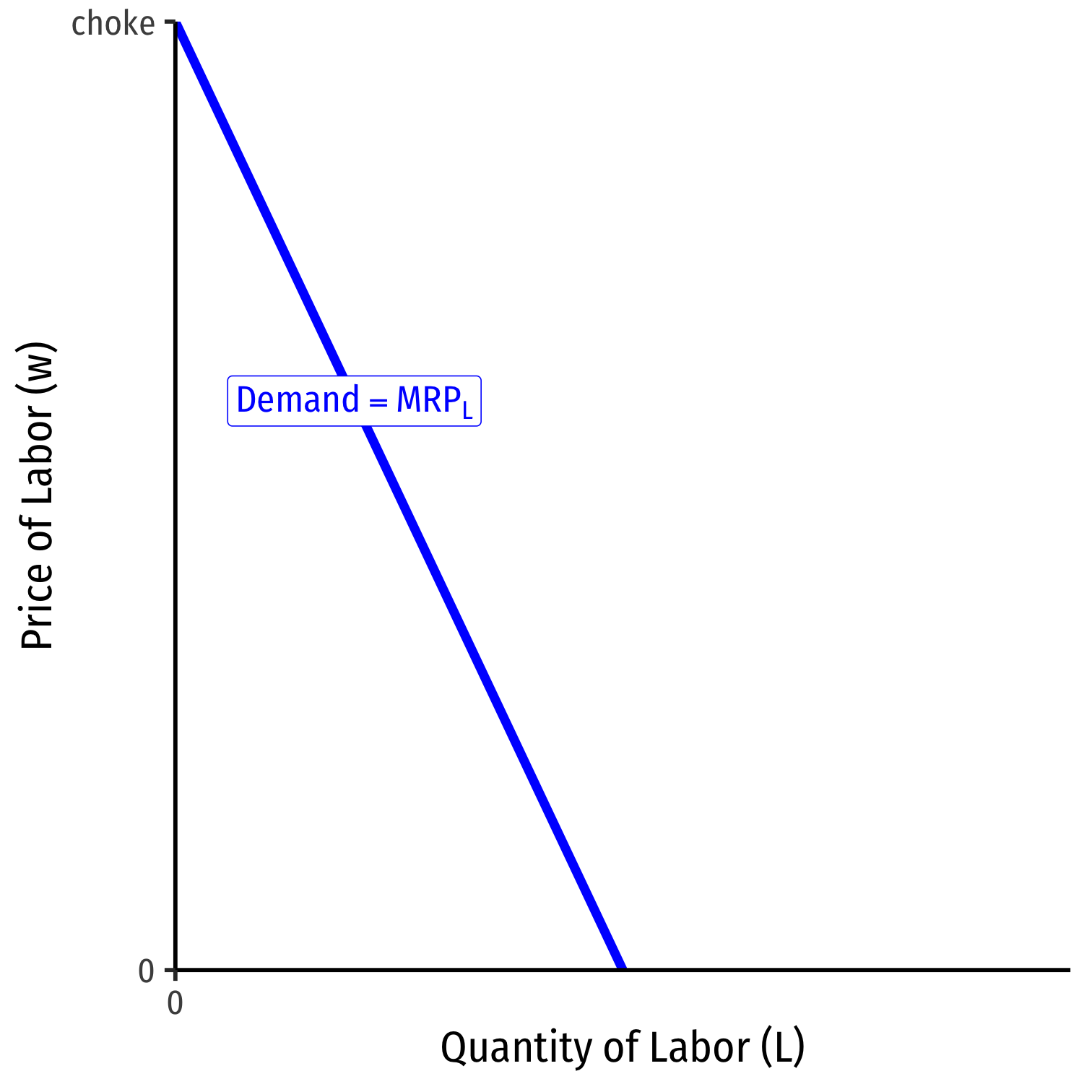
MRPL=MPL∗MR(q)
- For a firm in a competitive (output) market, firm's MR(q)=p, hence
MRPL=MPL∗p
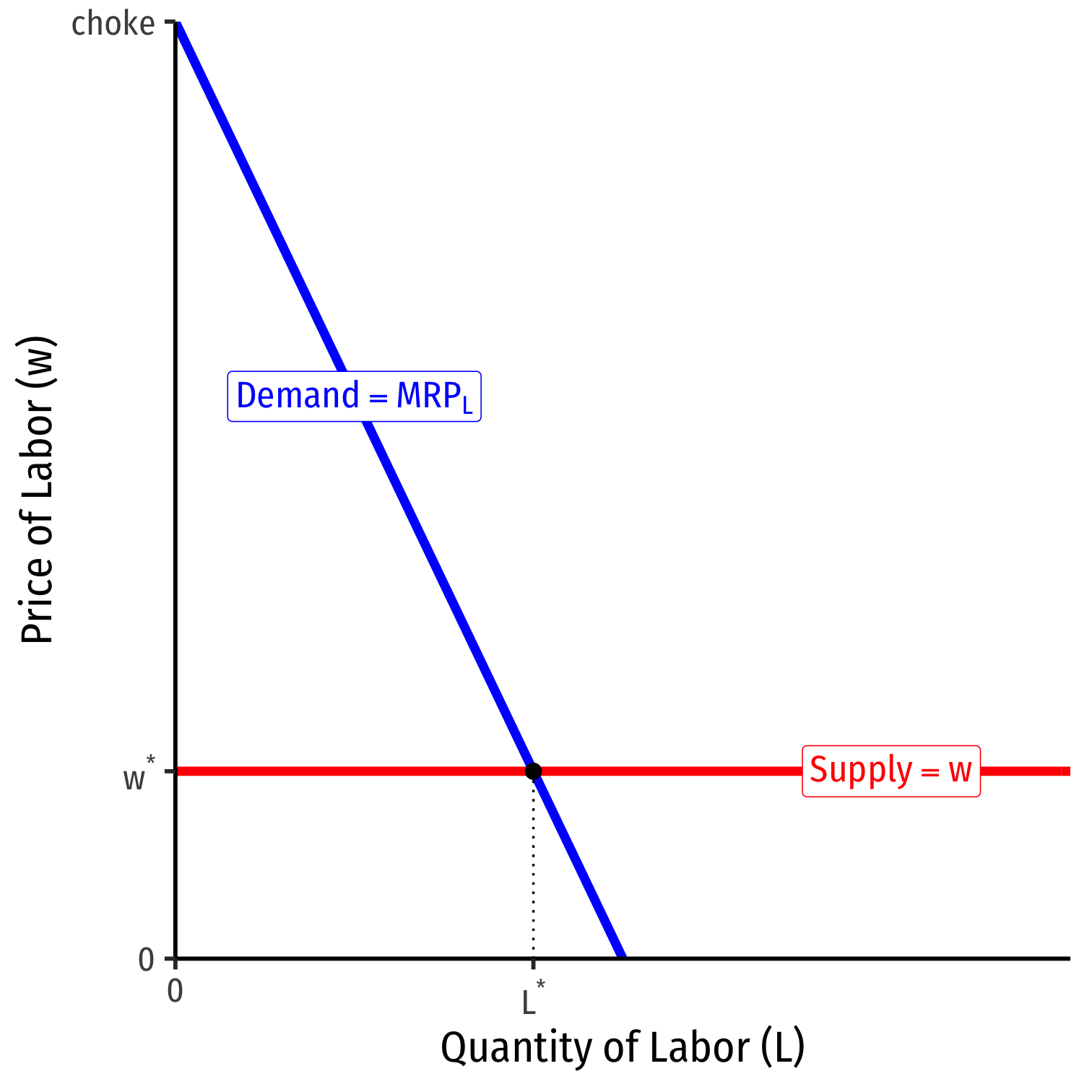
Marginal benefit of hiring labor, MRPL falls with more labor used
- production exhibits diminishing marginal returns to labor
Choke price for labor demand: price too high for firm to purchase any labor
 ]
]
A Competitive Factor Market
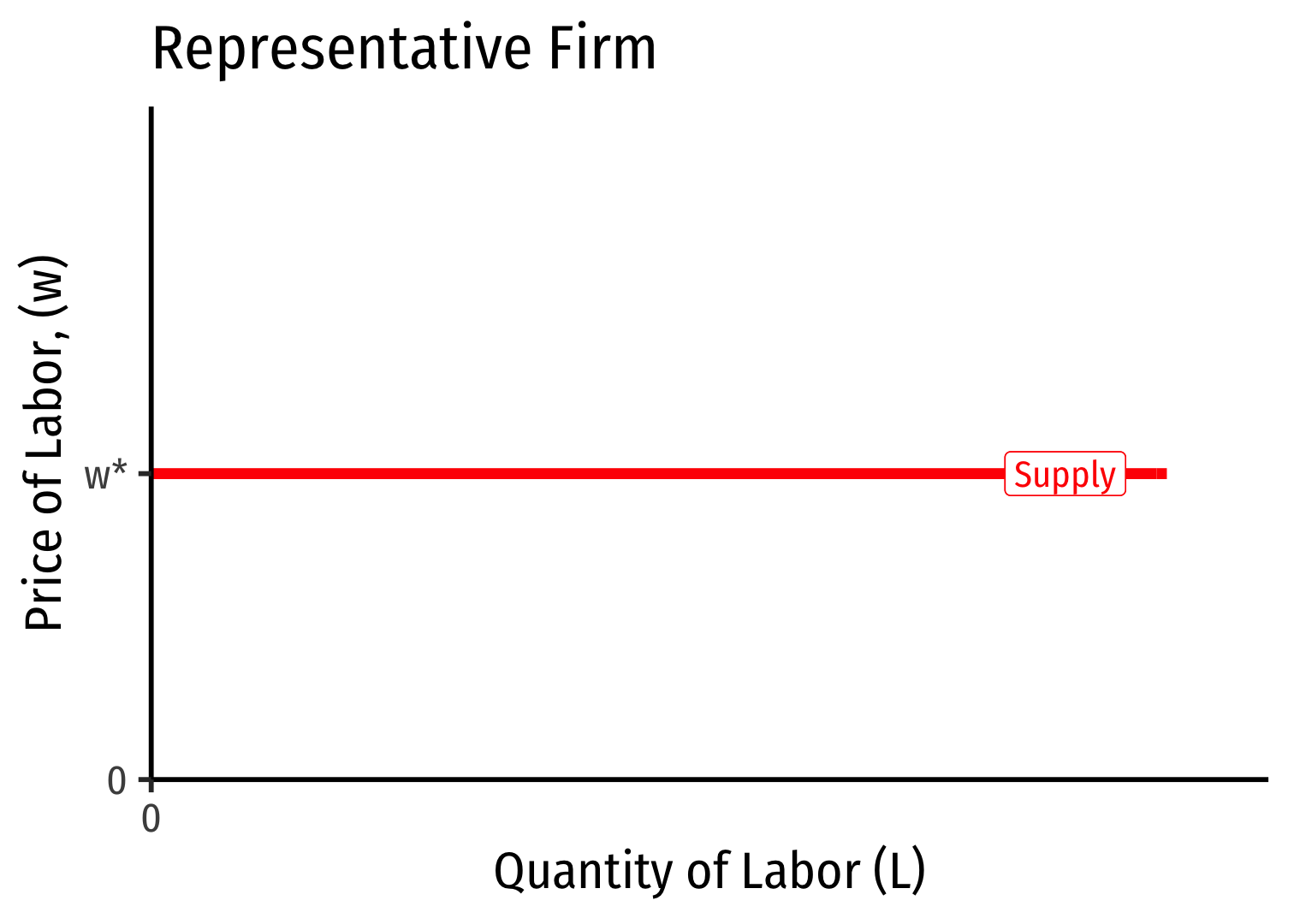
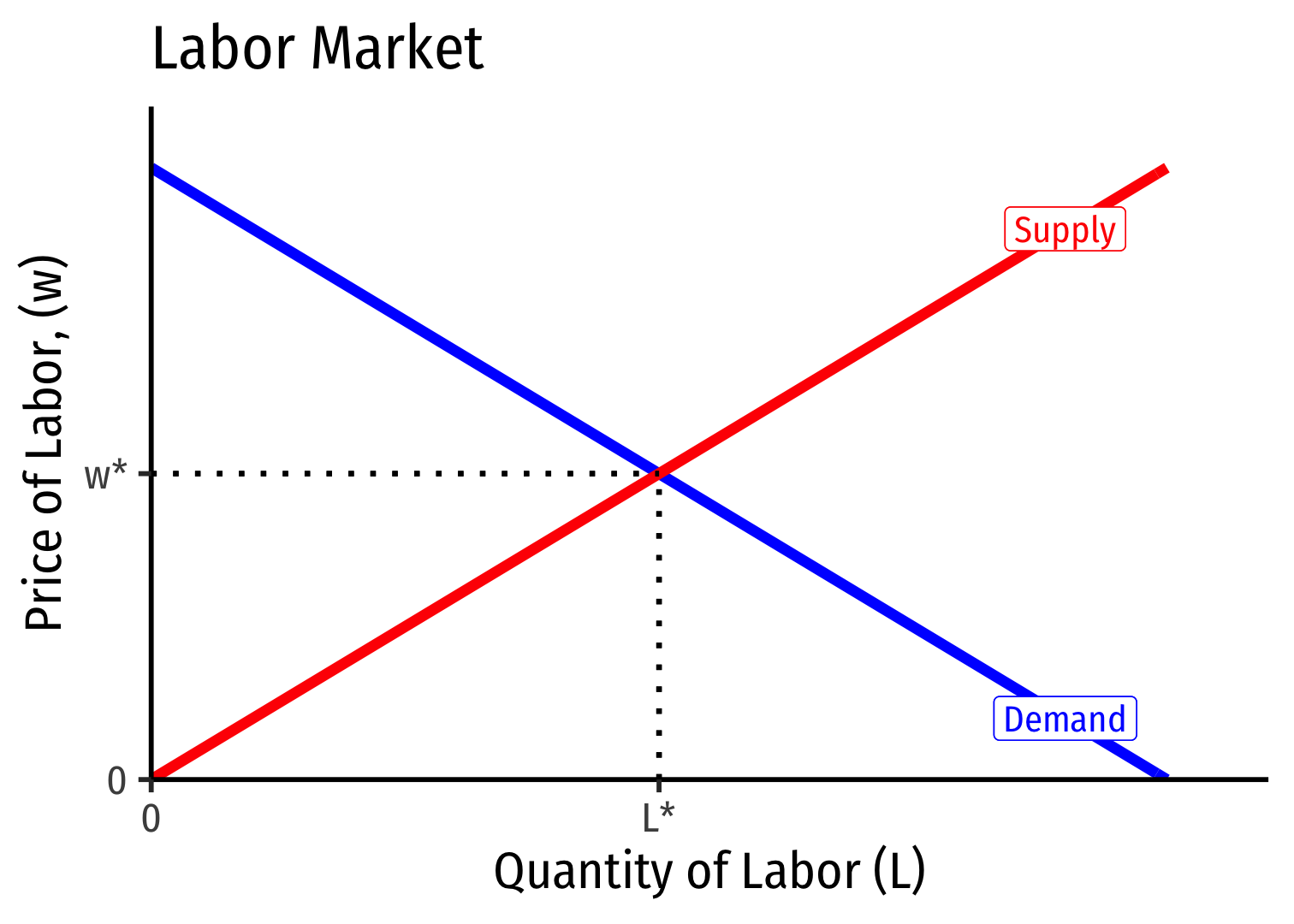
- If the factor market is competitive, labor supply for an individual firm is perfectly elastic at the market wage
Labor Supply and Firm Demand
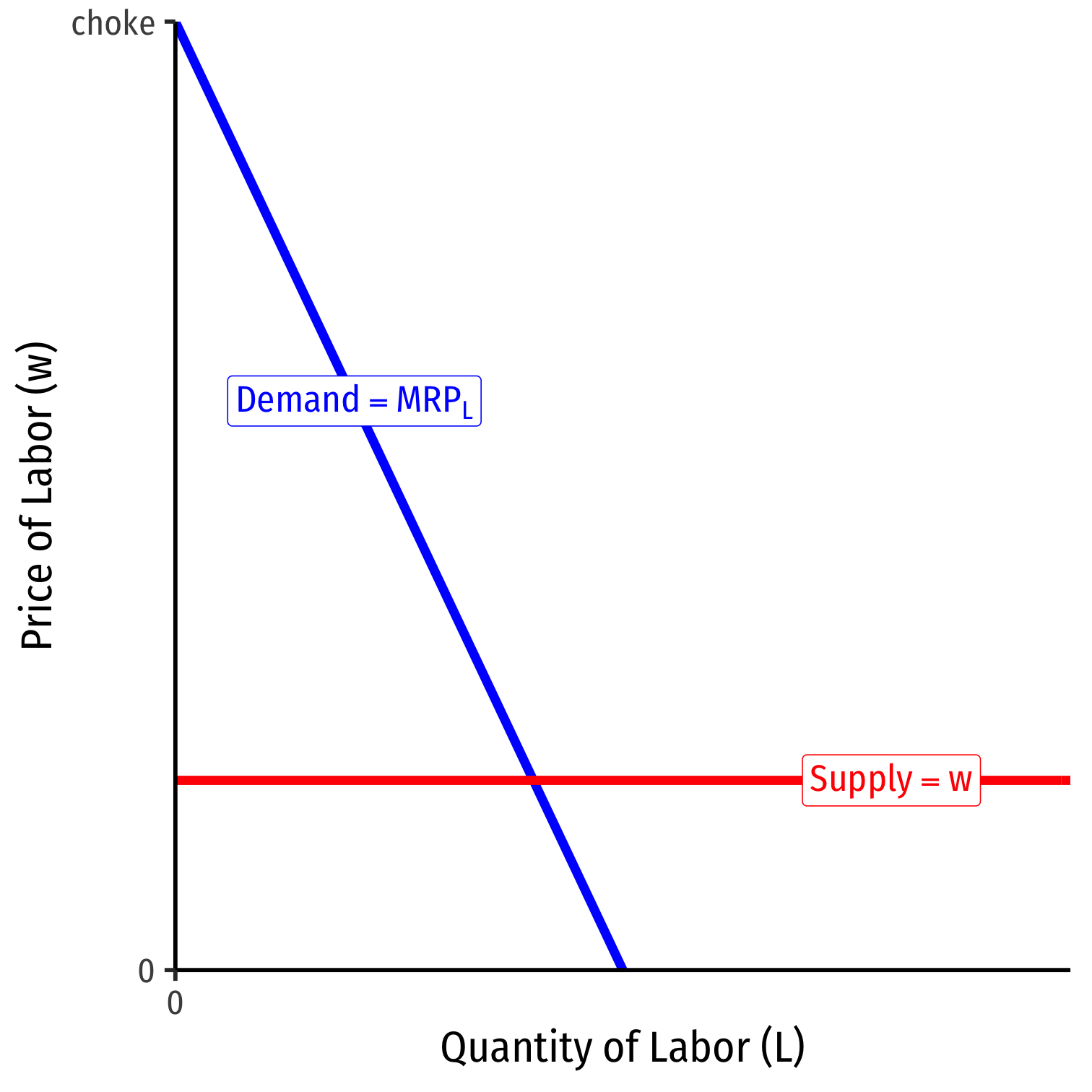
We've seen a falling MRPL, the marginal benefit of hiring labor
Marginal cost of hiring labor, w, remains constant
- so long as firm is not a big purchaser in the factor market
Labor Supply and Firm Demand
At low amounts of labor, marginal benefit (MRPL)<w marginal cost
Firm will hire more labor
Labor Supply and Firm Demand
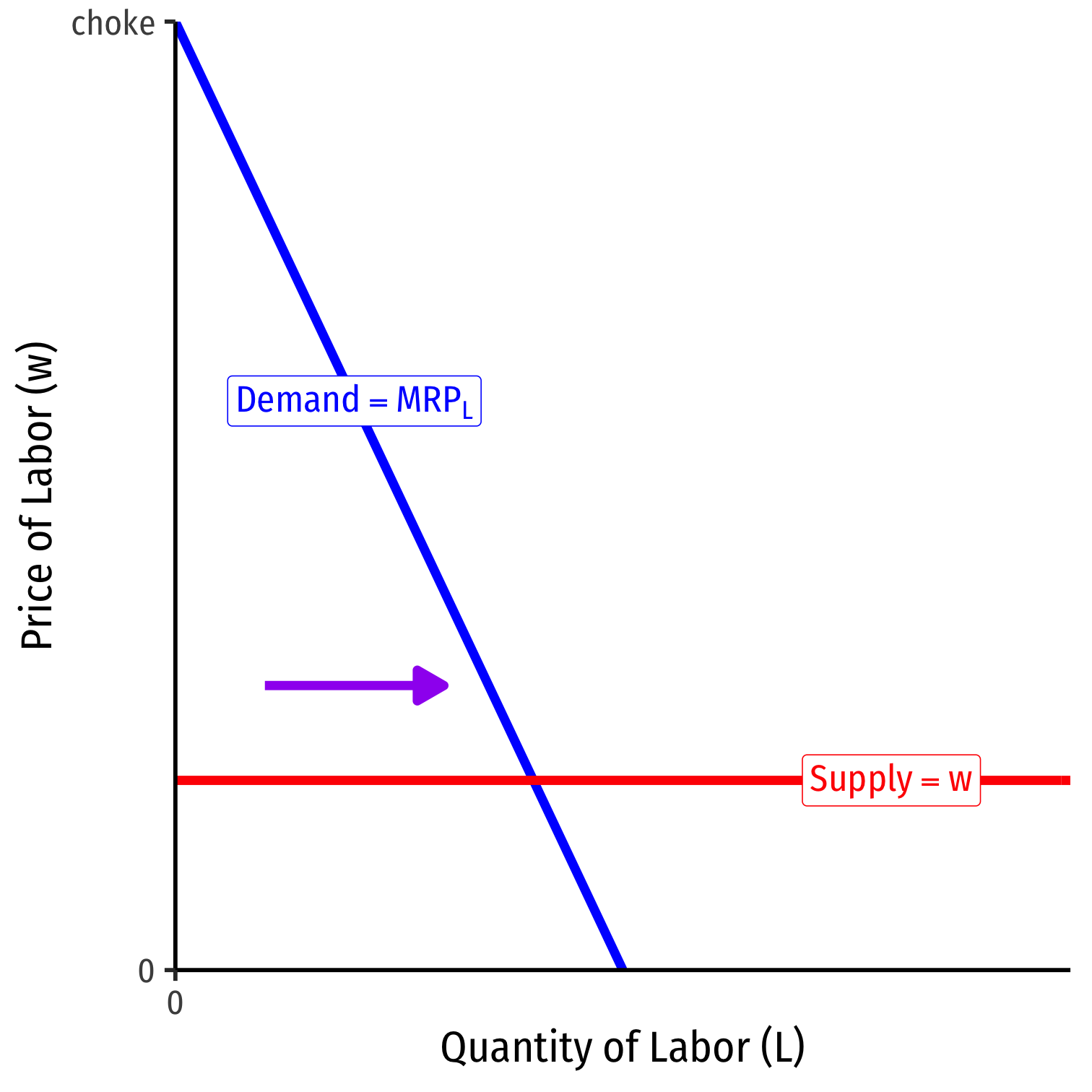
At high amounts of labor, marginal benefit (MRPL)<w marginal cost
Firm will hire less labor
Labor Supply and Firm Demand
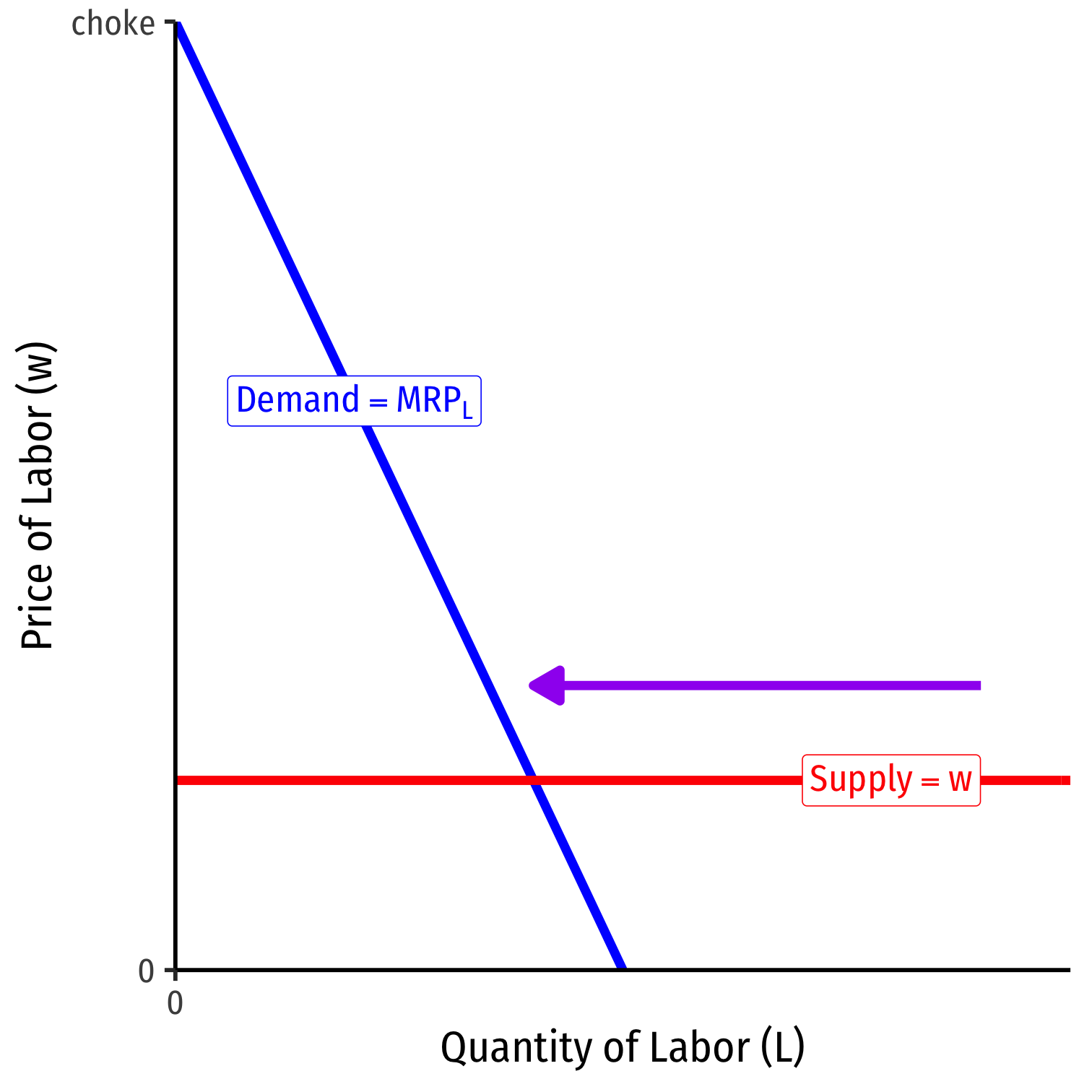
Firm hires L∗ optimal amount of labor where w=MRPL (MB=MC)
Equivalently (rearranging): MR=wMPL
- implies that firm's producing the profit-maximizing output q∗ means firm is using the optimal amount of labor L∗
Economic Rent I
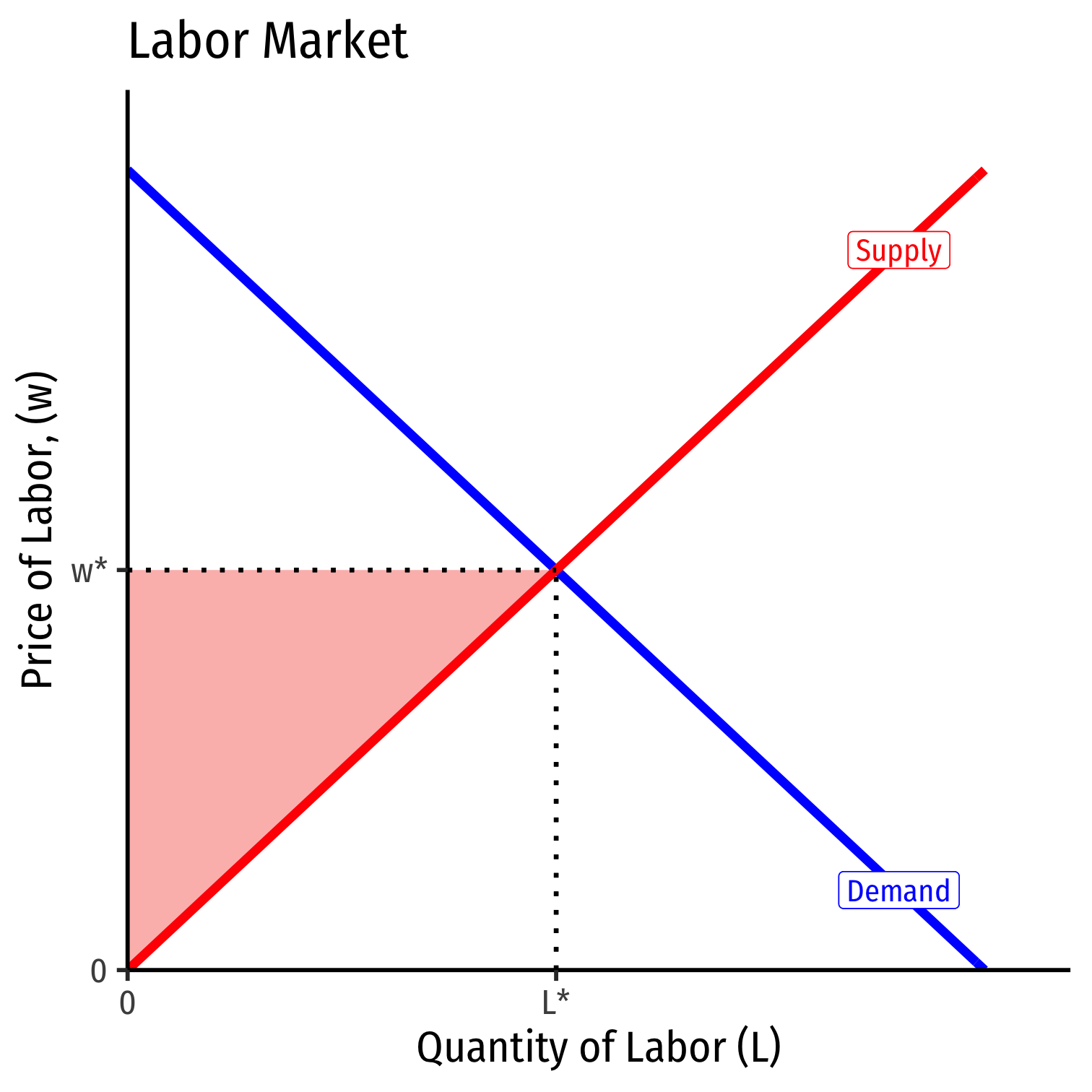
Recall supply is the minimum willingness to accept, the minimum price necessary to bring a resource to market
But all (equivalent) labor is paid the market wage, w∗ determined by market labor supply and labor demand
Some workers would have accepted a job for less than w∗
Labor earns economic rent in excess of what is needed to bring it into the market (its opportunity cost)
Economic Rent II
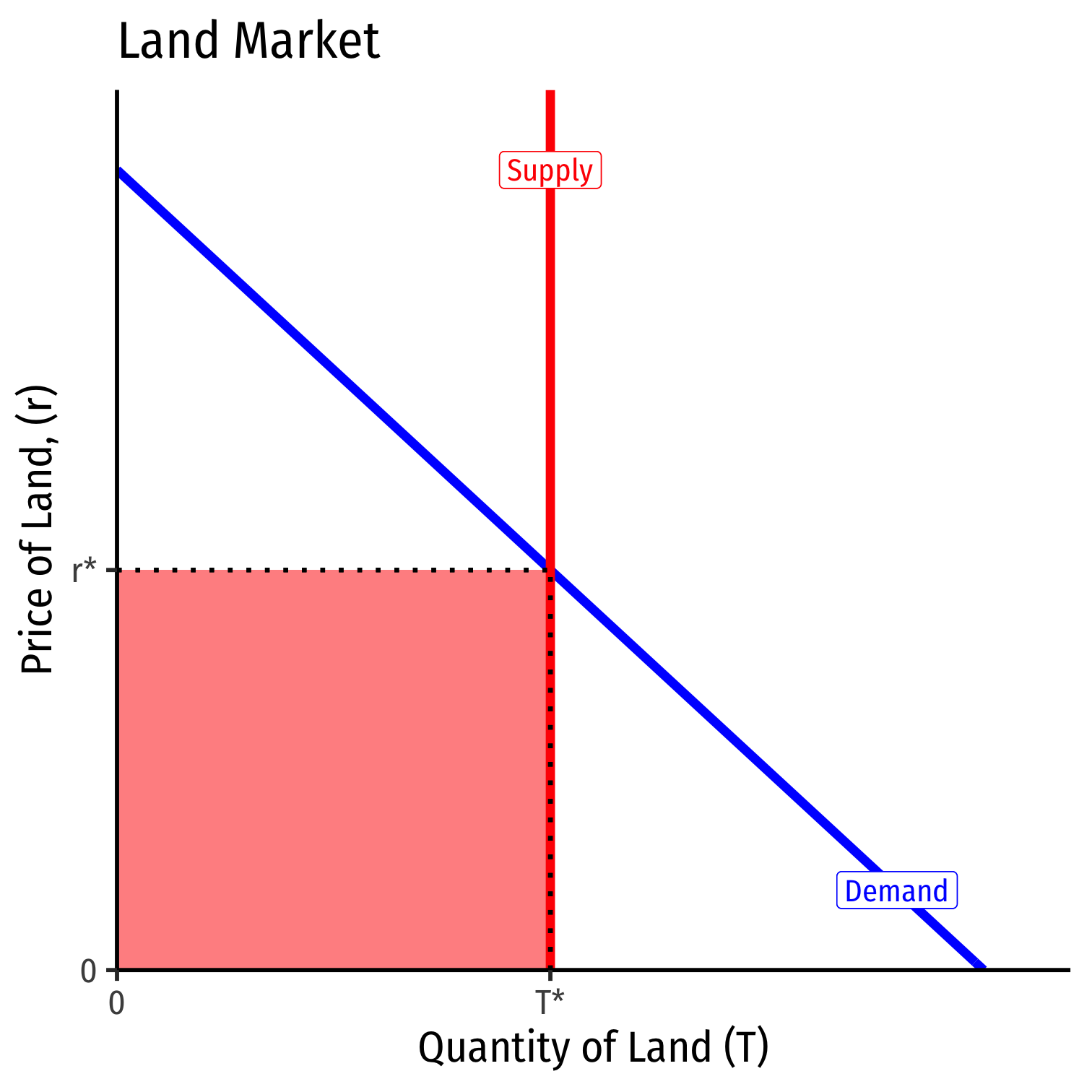
Consider a factor (such as land) for which the supply is perfectly inelastic (e.g. a fixed supply)
Then the entire value of the land is economic rent!
The less elastic the supply of a factor, the more economic rent it generates!